
Heatmap
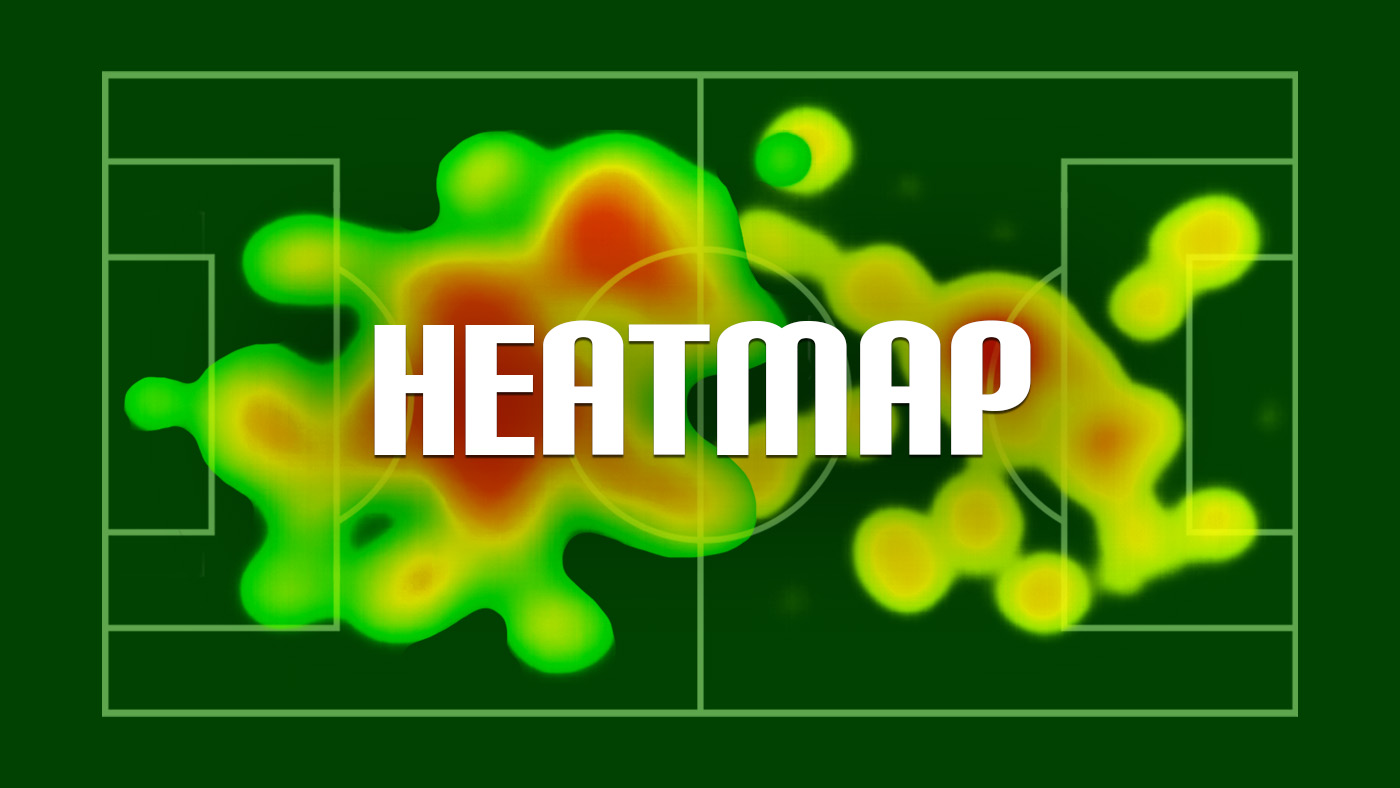
A Heatmap, also called a heat map or heatmaps in plural, in football is a visual tool that illustrates where a player or team has been most active on the pitch during a match. It uses color gradients to represent the frequency of movement or ball involvement, with hotter colors such as red and orange highlighting areas of greater activity, while cooler colors like green or blue indicate less involvement. In simple terms, it shows where football actually happened.
Heatmaps are now one of the most recognizable visuals in football analytics. They give an immediate overview of positioning, movement, and tactical tendencies, allowing coaches, analysts, and fans to understand how players interpret their roles and how teams control different zones of the field. Instead of reading through numerical stats, a single glance at a heatmap can reveal where pressure was applied, where space was exploited, and how a match unfolded spatially.
How Heatmaps Work
Heatmaps are generated from tracking data and event data collected during matches. Every time a player touches the ball, makes a pass, or moves through a particular area, the system records it as an occurrence in that part of the pitch. The field is divided into small zones, and each action contributes to the color intensity of the corresponding zone. The more activity recorded in an area, the warmer the color becomes. For example, a full-back’s heatmap might display a bright streak along the touchline to reflect their overlapping runs, while a defensive midfielder’s map often concentrates around the central third where most ball recoveries and distributions occur.
Advanced tracking systems can now include off-ball movement as well, providing a more complete picture of a player’s positioning even when not directly involved in play. This combination of ball and movement data turns a simple image into a powerful diagnostic tool for performance analysis.
Interpretation and Tactical Insights
A heatmap does more than show where a player has been; it reveals tactical behavior and decision-making patterns. Coaches and analysts use them to evaluate whether players are maintaining positional discipline or drifting too far from their assigned zones. For attacking players, heatmaps show which channels or pockets of space they prefer to exploit, while for defenders, they highlight areas where the team applies pressure or engages in duels. In a broader tactical sense, team heatmaps can expose whether a side builds through the left or right flank, how compact or stretched their formation is, and which zones are consistently under or overused.
Heatmaps also offer valuable insight into a team’s overall shape during different match phases. A team employing a high press will show dense color concentration in the opponent’s half, whereas one playing a deep block will exhibit cooler zones higher up the pitch. Comparing heatmaps between halves or between matches can help analysts identify adjustments, such as tactical switches or fatigue patterns.
Advantages of Using Heatmaps
The main advantage of a heatmap lies in its visual simplicity. It distills thousands of data points into an intuitive image that anyone can interpret. Coaches use them to deliver quick feedback to players, scouts use them to assess a player’s consistency and role interpretation, and fans use them to understand performance trends without needing to interpret complex data. When combined with other metrics such as PPDA or expected goals (xG), heatmaps help build a multi-dimensional understanding of both team and individual performance.
Limitations of Heatmaps
Despite their usefulness, heatmaps must be read carefully. They display where a player has been active but not how effective they were in those actions. A large red area does not automatically indicate a good performance; it may reflect poor decision-making or wasted possession. Heatmaps also lack temporal context, meaning they do not show when activity occurred or under what tactical circumstances. To draw meaningful conclusions, analysts usually pair heatmaps with video footage, event data, or positional metrics.
Heatmaps in Modern Football Analysis
In the modern game, heatmaps have evolved far beyond basic touch maps. Platforms like Opta, StatsBomb, and Wyscout now produce dynamic visualizations that integrate player movement, passing networks, and possession value models. These advanced versions show not only where a player operated but also the impact of their positioning on the match’s flow and outcome. For example, an attacking midfielder’s heatmap can be merged with chance creation data to reveal which zones are most productive, while a team’s defensive heatmap can highlight where pressing triggers are activated.
Today, heatmaps are a standard feature in tactical presentations and media coverage because they bridge the gap between data and intuition. Whether analyzing Lionel Messi’s drifting into half-spaces or Manchester City’s positional dominance in the final third, heatmaps make complex patterns visible, transforming raw data into meaningful football insight.