3-2-4-1 Formation
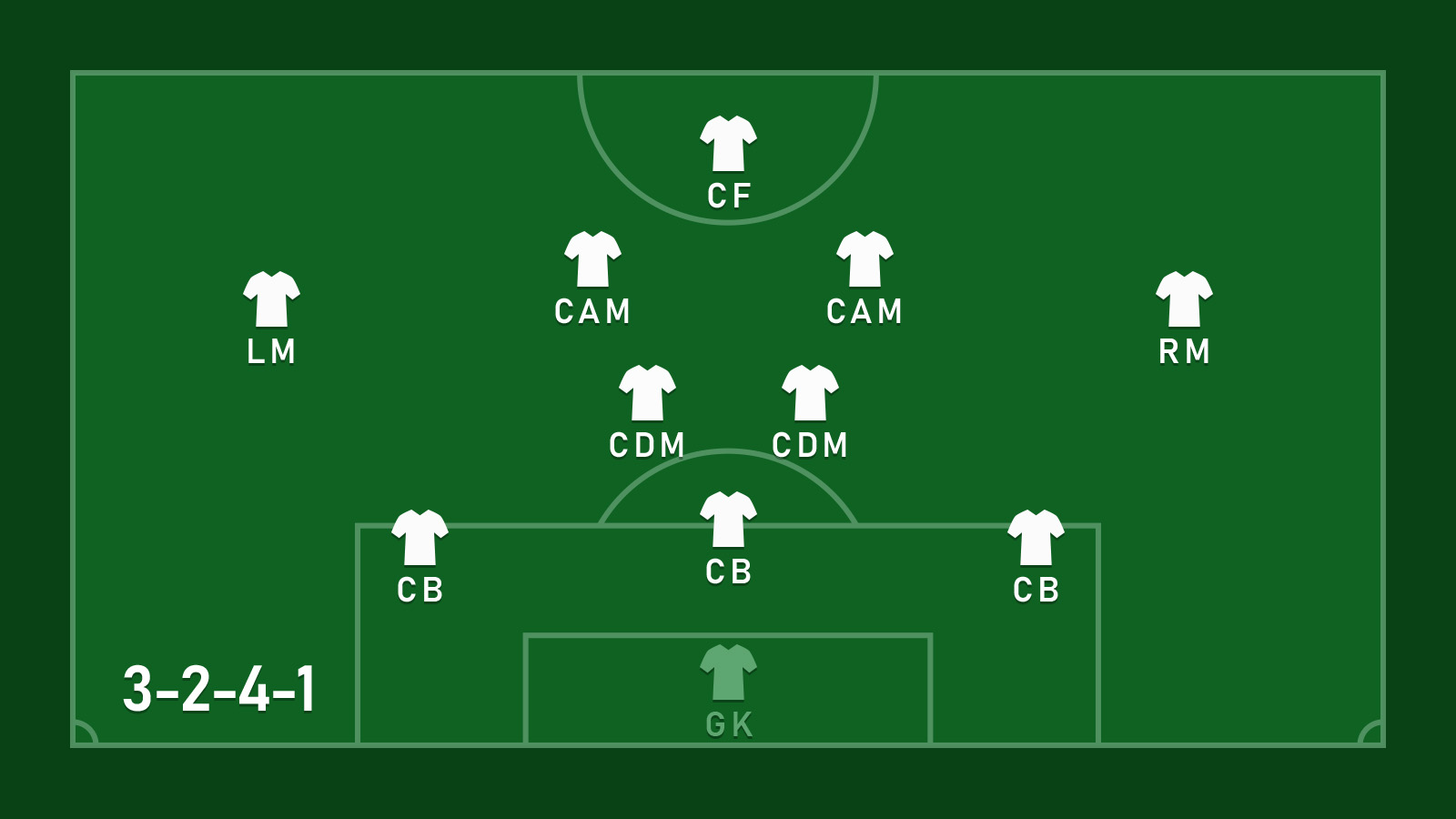
The 3-2-4-1 is a modern football formation built around control, positional play, and attacking presence between the lines. It consists of three central defenders, two holding midfielders, four advanced midfielders across the width and half-spaces, and a single striker. This formation is most commonly used by teams that want to dominate possession, overload midfield zones, and apply sustained pressure in the opponent’s half.
At the back, three centre-backs provide defensive stability and allow the team to build play without relying on full-backs. In front of them sit two deeper midfielders, often referred to as the double pivot. Their role is to protect the defense, recycle possession, and maintain balance when the team attacks. Ahead of them, four attacking midfielders operate across the pitch, usually with two wide players and two central players positioned in the half-spaces.
The lone striker plays at the top of the system, tasked with occupying centre-backs, linking play, and finishing chances created by the four advanced midfielders. The 3-2-4-1 naturally forms a box midfield structure, which helps teams control central areas and sustain attacks while remaining structurally secure.
Strengths
The 3-2-4-1 formation is used by coaches who prioritize positional control and attacking pressure. Its main strengths include:
Midfield Control
With six players occupying central and half-space zones, the 3-2-4-1 offers exceptional control in midfield. The double pivot provides stability, while the advanced midfielders create constant passing options. This structure makes it difficult for opponents to press effectively without leaving gaps elsewhere.
Strong Rest Defense
The combination of three centre-backs and two holding midfielders creates a strong defensive base behind the ball. Even when attacking with numbers, the team maintains coverage against counter-attacks, allowing for aggressive pressing after losing possession.
Overloads Between the Lines
The four advanced midfielders are positioned to overload central and half-space areas. This allows the team to play through compact defensive blocks, create quick combinations, and generate shooting opportunities from dangerous zones outside the penalty area.
Sustained Attacking Pressure
The 3-2-4-1 is designed to keep the opposition pinned back. With multiple players occupying advanced positions, the team can recycle possession high up the pitch and apply continuous pressure without needing to retreat into a defensive shape.
Flexibility in Possession
The formation adapts easily during buildup. It can resemble a 3-4-3, 3-2-5, or even a 2-3-5 depending on player movement. This positional flexibility makes the team unpredictable and harder to defend against.
Weaknesses
Wide Defensive Exposure
Because there are no traditional full-backs, wide defensive areas can be exposed if the wide midfielders do not track back effectively. Opponents who switch play quickly or attack the flanks can stretch the defensive line.
High Physical Demands
The wide midfielders and central players in the advanced line must cover large distances and contribute both offensively and defensively. Without strong work rate and discipline, the team can lose its compact shape.
Striker Isolation
If the attacking midfielders fail to support the lone striker with forward runs, the striker may become isolated against multiple defenders. This can reduce penetration and make the attack easier to contain.
Vulnerability to Fast Transitions
Although the rest defense is strong, quick vertical transitions can still cause problems if the double pivot is bypassed. Teams that play direct passes through the center can exploit moments when midfielders are positioned too high.
Requires Tactical Intelligence
The 3-2-4-1 demands players who understand positioning, spacing, and timing. Poor spacing or decision-making can quickly disrupt the structure and leave the team unbalanced.
How to Counter the 3-2-4-1 Formation
Countering the 3-2-4-1 requires exploiting its structural demands rather than simply matching numbers. Effective approaches include:
Target wide areas early. By attacking the flanks quickly and forcing the wide midfielders to defend deep, opponents can stretch the shape and pull central players out of position.
Attack behind the advanced midfield line. Space often appears between the four advanced midfielders and the double pivot. Quick vertical passes into this zone can disrupt the defensive structure and create direct access to the back line.
Use fast switches of play. The 3-2-4-1 relies on compactness. Rapid switches from one side to the other can expose slow defensive shifts and isolate wide defenders.
Press the double pivot aggressively. The two holding midfielders are crucial to the system. By pressing them tightly, opponents can disrupt buildup and force turnovers in dangerous central areas.
Exploit direct play selectively. Well-timed long balls into the channels can bypass midfield congestion and force centre-backs into wide defensive situations, where they are less comfortable.