
3-2-3-2 Formation
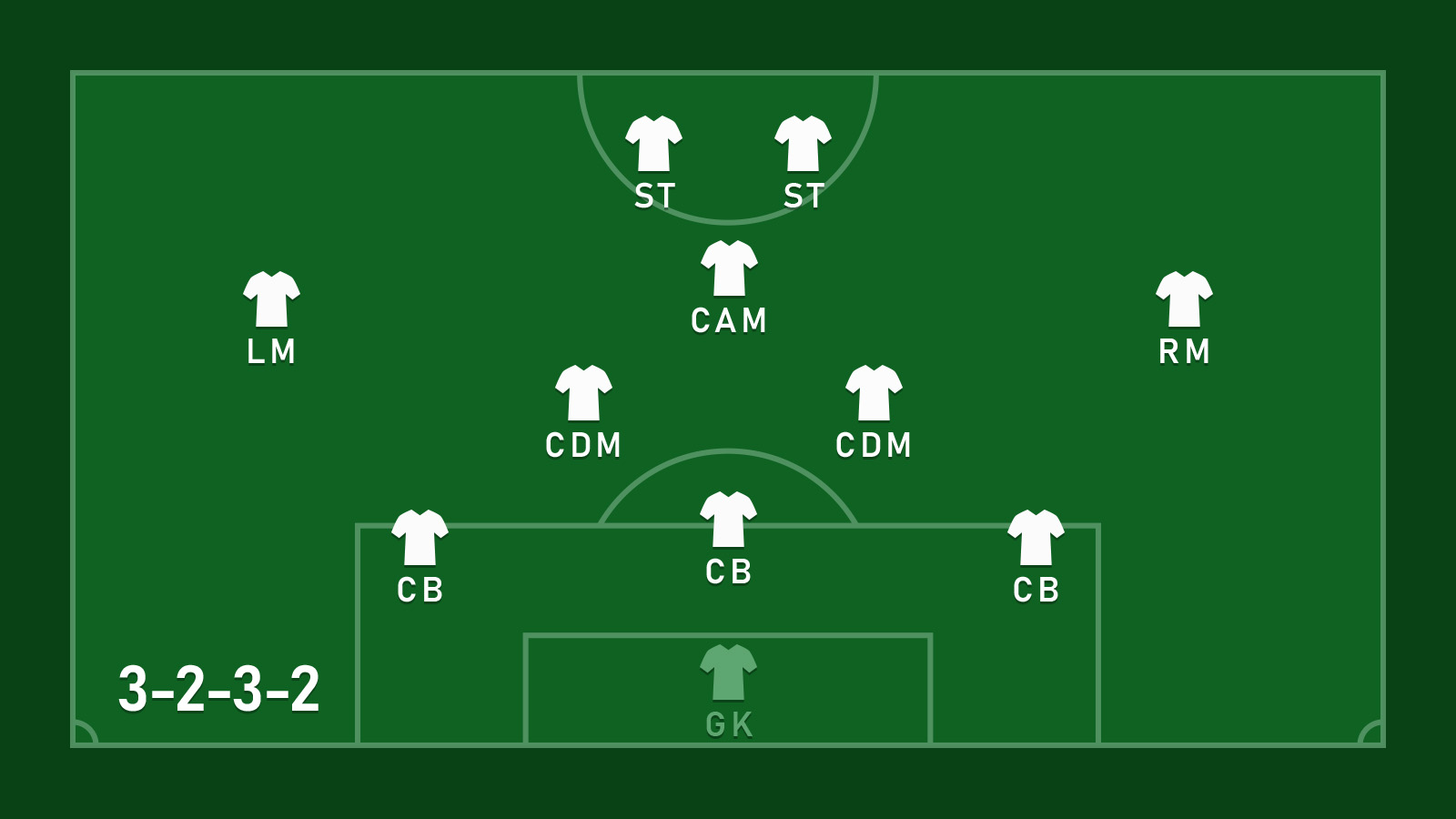
The 3-2-3-2 is a balanced football formation built around central control, compactness, and two-striker presence. It consists of three central defenders, two holding midfielders, three advanced midfielders, and two forwards. This system is designed for teams that want stability at the back while maintaining strong central connections and consistent attacking threat through the middle.
Unlike formations that rely heavily on wide play, the 3-2-3-2 focuses on dominating central zones and half-spaces. The structure allows for short passing combinations, controlled buildup, and sustained pressure while keeping enough players behind the ball to manage transitions.
The formation naturally creates vertical and horizontal compactness, making it effective for teams that value positional discipline, coordinated pressing, and structured attacking patterns rather than constant wing play.
Strengths
The 3-2-3-2 formation offers several tactical advantages, particularly for teams that want control and balance.
Central Dominance
With five players positioned across midfield lines, the 3-2-3-2 allows teams to dominate the center of the pitch. The double pivot provides stability, while the three advanced midfielders operate between lines to create passing triangles and overload central defenders.
Two-Striker Presence
Having two forwards keeps opposition center-backs occupied and creates more consistent penalty-box presence. This helps convert buildup play into chances and prevents defensive lines from stepping too high.
Strong Defensive Base
The three center-backs supported by two holding midfielders create a solid rest-defense structure. This setup limits counter-attacking opportunities and allows the team to press aggressively after losing possession.
Compact Team Shape
The formation maintains short distances between lines, which improves pressing efficiency and defensive recovery. Compactness also helps the team circulate the ball quickly without becoming stretched.
Flexible Midfield Roles
The three advanced midfielders can rotate positions, drop deeper, or push forward depending on the phase of play. This flexibility adds unpredictability and helps break down organized defenses.
Weaknesses
Limited Natural Width
Without traditional wingers or wing-backs, width must be provided by center-backs stepping wide or midfielders drifting outward. Teams that defend compactly on the flanks may restrict attacking options.
High Demands on Midfielders
The midfield players must cover large areas and contribute defensively and offensively. Without disciplined movement and fitness, gaps can appear between lines.
Vulnerability to Wide Overloads
Opponents using strong wing play or overlapping full-backs can stretch the defensive structure, especially if the midfield does not shift quickly to provide cover.
Requires Intelligent Forwards
The two strikers must link play effectively, press responsibly, and time their movements well. Static or isolated forwards reduce the formation’s effectiveness.
Spacing Risks Between Lines
If the advanced midfield line pushes too high, space can open between midfield and defense, allowing opponents to progress centrally.
How to Counter the 3-2-3-2 Formation
Breaking down a 3-2-3-2 requires exploiting its structural tendencies rather than matching numbers directly.
Attack wide areas early. By switching play quickly and stretching the pitch, opponents can expose the lack of natural wide defenders and force midfielders into uncomfortable defensive positions.
Exploit space behind the advanced midfielders. Quick vertical passes into this zone can disrupt the compact shape and force holding midfielders to step out, creating gaps elsewhere.
Overload the flanks with full-backs and wingers. Numerical advantages out wide can pull center-backs away from their positions and open central channels.
Press the double pivot aggressively. The two holding midfielders are key to maintaining balance. Cutting off their passing options can disrupt buildup and force rushed decisions.
Use diagonal runs from wide attackers. These movements can confuse defensive responsibilities and stretch the three-man back line horizontally.